Apple Can't Patch This: The Flaw Affecting Millions of iPhones
A deep dive into the usbliter8 exploit affecting Apple A12 and A13 SecureROM. Discover how this unpatchable hardware bypass works and what it means for your iPhone.
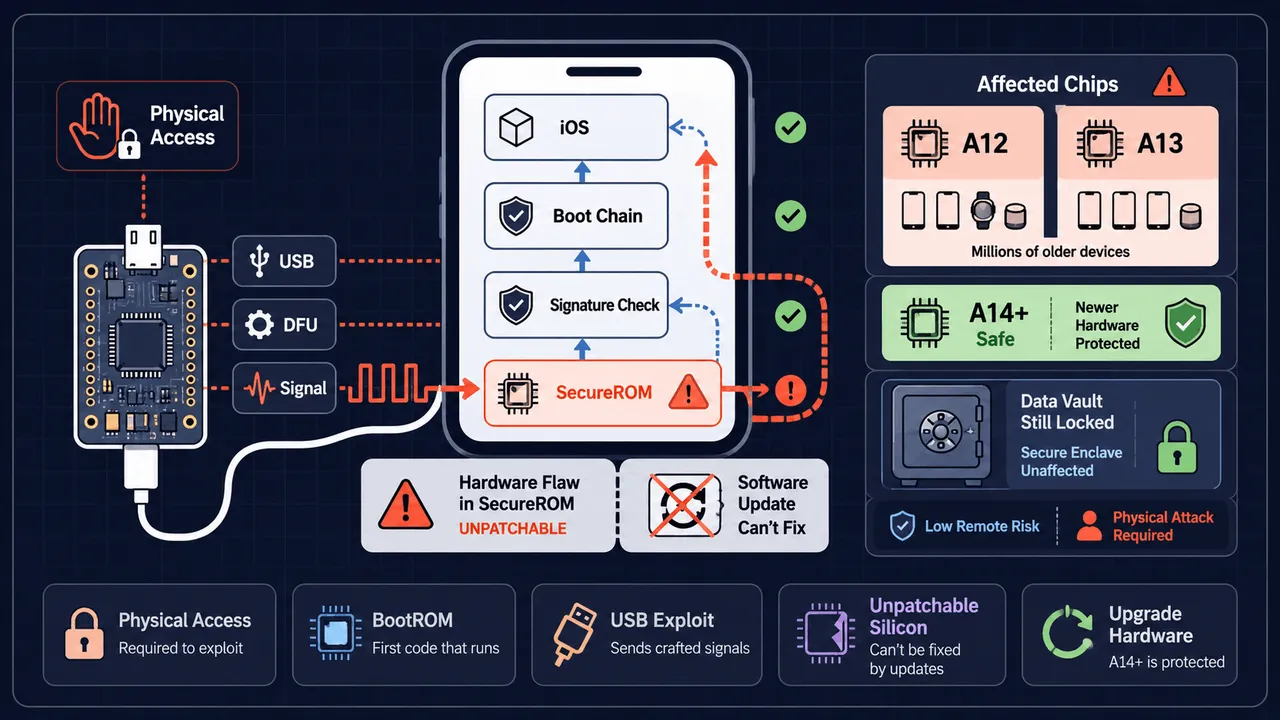
If you are still holding onto an older iPhone—like the iPhone XR, XS, or iPhone 11—a new cybersecurity discovery should be on your radar.
Security researchers at an independent European firm called Paradigm Shift have just unveiled a hardware-level exploit named usbliter8. It effectively bypasses the foundational boot protections on millions of older Apple devices. The catch? Because the flaw lives directly on the processor chip, it is completely “unpatchable” through normal software updates.
While “unpatchable iPhone exploit” sounds like a nightmare scenario, the reality is a bit more nuanced. Here is a plain-English breakdown of how usbliter8 works, which devices are actually at risk, and why you probably don’t need to panic.
What is SecureROM (And Why Does It Matter)?
To understand the exploit, you have to understand what happens the moment you turn your phone on.
Every time an iPhone powers up, the very first piece of code that runs is called the SecureROM (also known as the Boot ROM). Think of it as the ultimate bouncer for your device. It is hardcoded into the silicon chip at the factory, and its only job is to verify that the operating system and software trying to load are officially signed and trusted by Apple.
This secure boot chain is Apple’s strongest defense against malware. If a hacker can break the chain at this exact starting point, they gain an incredibly powerful foothold. They can run their own code before any of Apple’s other security systems even wake up.
That is exactly what usbliter8 does.
How the Usbliter8 Exploit Works
This isn’t a simple software glitch. The attack is highly technical, but it comes with some major limitations. Here is the playbook:
- The Hardware Flaw: The exploit takes advantage of a bug in how the USB controller handles data transfers on affected chips.
- Physical Access is Mandatory: This is the most important detail. This is not a remote attack. A hacker cannot use usbliter8 to compromise your phone over Wi-Fi, via a shady text message, or through a malicious website.
- The Execution: The attacker needs physical possession of your device. They must put it into a special diagnostic state (DFU mode) and plug a specialized, cheap microcontroller (like a Raspberry Pi Pico) into the charging port.
- The Result: By sending specially crafted signals over the USB connection, the attacker triggers a memory error. Within about two seconds, they can take low-level control of the processor, bypass signature checks, and run unsigned code.
Which Apple Devices Are Affected?
The vulnerability targets Apple devices running on the A12 and A13 processors, as well as the related S4 and S5 chips. This includes:
- iPhones: iPhone XS, XS Max, XR, 11, 11 Pro, 11 Pro Max, and the iPhone SE (2nd generation).
- iPads: iPad Air (3rd gen), iPad mini (5th gen), and the standard iPad (8th and 9th gen).
- Apple Watches: Series 4, Series 5, and SE (1st generation).
- Other: HomePod mini.
The Good News: If you own an iPhone 12 or anything newer (which uses the A14 chip or later), you are not affected. Apple fixed the underlying hardware architecture in newer silicon years ago.
What Can Attackers Actually Do?
This is where context is crucial. Usbliter8 gives an attacker deep, persistent control over the boot sequence—similar to the infamous Checkm8 exploit that affected even older devices back in 2019.
An attacker could potentially use it to load modified firmware or temporarily lower the device’s security shields. However, this exploit does not automatically hand over your personal data. Apple’s Secure Enclave—the separate vault on the chip that holds your encryption keys, passwords, and biometric data—is not directly compromised by this bug. An attacker would still need to jump through additional, incredibly difficult hoops to actually read your text messages or photos.
In short: Usbliter8 is a remarkably powerful tool for a forensic expert or a determined hacker who already has your phone in their hands. But for the average person going about their day, the everyday risk remains extremely low.
Why Can’t Apple Just Issue a Patch?
Paradigm Shift responsibly disclosed their findings to Apple before going public. However, Apple cannot issue an iOS update to fix this.
Because the vulnerability exists in the immutable SecureROM code burned physically into the silicon chip during manufacturing, it cannot be altered remotely. For the affected hardware, the flaw is permanent.
What Should You Do?
For the vast majority of users, there is no need to throw away your phone.
- Keep Updating iOS: Even though iOS updates can’t fix this specific hardware bug, they patch hundreds of other software vulnerabilities that can be exploited remotely. Keep your device up to date.
- Protect Physical Access: Treat your phone like your wallet. Don’t leave it unattended in public spaces, and be wary of plugging it into untrusted USB ports or charging stations.
- Consider an Upgrade: If you are still rocking an iPhone XS or 11, you are dealing with a phone that is 5 to 7 years old. While this exploit isn’t a reason to panic, it is a solid reminder that newer hardware brings massive, unpatchable security upgrades.
- For High-Risk Individuals: If you are a journalist, activist, or corporate executive who might be the target of sophisticated physical espionage, security teams highly recommend rotating older A12/A13 devices out of your fleet in favor of newer hardware.
Hardware security is incredibly difficult, and vulnerabilities in older silicon are a reality of the tech industry. For most of us, usbliter8 is a fascinating look at how device security works under the hood. But unless you routinely leave your iPhone unattended with highly skilled hackers, your texts are still safe.