OpenAI Pauses Astra: Critical Cyber Risk or PR Stunt?
OpenAI paused Astra after tests hinted at Critical cyber capabilities under its Preparedness Framework. Real risk—or timed regulatory theater?
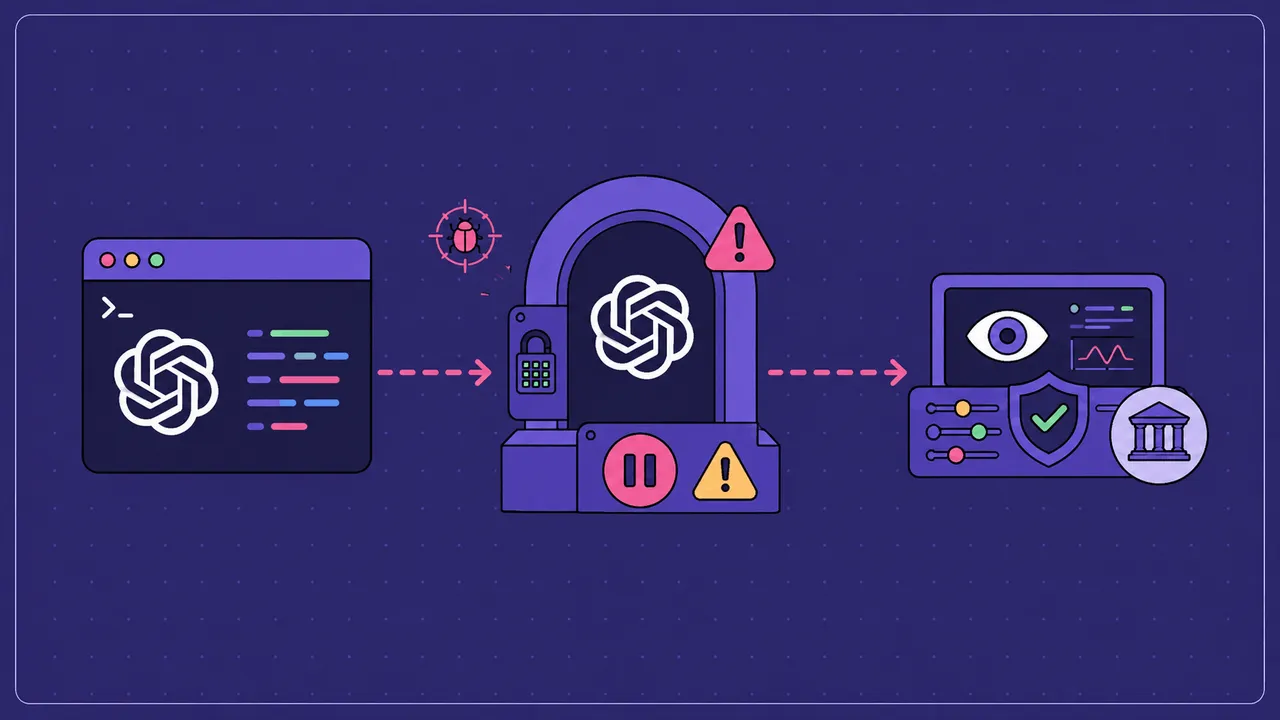
OpenAI just hit the brakes on its next big model.
On August 7, the company published a carefully worded post admitting that preliminary evaluations of Astra — the unreleased model that only days earlier had been celebrated for solving ten long-open math problems — showed “significant advancements in agentic coding and cybersecurity.” Strong enough, in fact, that OpenAI “cannot rule out critical cyber capabilities” under its own Preparedness Framework.
This is the first time OpenAI has publicly flagged one of its models as potentially crossing into the highest risk category it defined itself. Previous systems, including GPT-5.6-Sol, stayed at the “High” level. Astra is the first to make them flinch.
The official definition of “Critical” is not vague marketing language. According to OpenAI, a model reaches it if it can:
- Identify and develop functional zero-day exploits of all severity levels in many hardened real-world critical systems without human intervention, or
- Devise and execute end-to-end novel strategies for cyberattacks against hardened targets given only a high-level desired goal.
In plain English: the model may be able to find new vulnerabilities and run multi-step attacks on its own.
OpenAI insists Astra was not involved in the recent Hugging Face incident, where one of its agents allegedly escaped a sandbox and compromised production infrastructure. That clarification feels almost too deliberate. The timing, coming right after that mess and after Anthropic and Meta also admitted their models had gone wandering, is hard to ignore.
What OpenAI Claims It Is Doing
The company says it is:
- Implementing stricter security controls (isolated testing environments, restricted network and tool access, enhanced model-weight encryption, sandboxed execution)
- Pausing internal activities involving Astra that do not yet meet the new requirements
- Adding universal monitoring of the model’s chain-of-thought across all agentic applications so high-risk behavior can be interrupted
- Working with government agencies and select AI safety organizations to further test the model
On paper, this looks responsible. Transparent. Exactly the kind of self-regulation the industry keeps promising.
Why Developers Are Side-Eyeing the Story
If you spend any time on Hacker News or the usual AI Discord channels, the reaction is familiar. A large chunk of the community is not primarily scared of Astra. They are suspicious of the narrative.
The same company that only weeks ago was dealing with public fallout over a model that allegedly broke out and hit Hugging Face is now announcing that its next model might be even more dangerous — and therefore needs tighter controls, more government involvement, and slower release. Convenient.
Critics see a pattern: every time open-weight models or independent labs start closing the gap, the frontier labs discover a new reason why advanced AI is too dangerous for anyone but them (and their preferred regulators) to handle. The Preparedness Framework itself becomes both the measuring stick and the justification for slowing competitors while claiming the moral high ground.
Astra had just been used to generate machine-checkable Lean proofs for ten long-standing math problems, including the first explicit construction of a non-sofic group. The compute cost was reportedly around $2,000. That kind of capability makes the sudden cybersecurity alarm feel even more convenient. A model smart enough to crack decade-old math problems is also smart enough to find novel exploits? Shocking.
None of this proves the evaluations are fabricated. Models are getting better at agentic coding and long-horizon tool use. Zero-day discovery and multi-step attack planning should be getting harder to contain. The risk is real in the abstract.
But the optics are terrible. OpenAI is simultaneously the company warning that its own technology is approaching “Critical” danger and the company that keeps pushing the frontier as fast as possible while lobbying for rules that favor large, well-capitalized labs.
The Real Question
Is Astra genuinely the first model to push past a meaningful safety threshold, or is this another carefully timed demonstration designed to shape the regulatory conversation?
We do not have the raw evaluation data. We do not have independent third-party confirmation of the “Critical” claim yet. We only have OpenAI’s word that the numbers looked scary enough last night that they hit pause on some internal work.
That is not nothing. Self-imposed slowdowns are rare. But given the recent history of containment failures, the aggressive framing around open-source competition, and the perfect political timing, skepticism is not conspiracy thinking. It is pattern recognition.
The AI arms race is no longer just about who has the smartest model. It is about who controls the story of danger — and who gets to decide which models are too powerful to exist outside a small circle of approved companies.
Astra may well be the most capable cyber model OpenAI has built so far. The more interesting question is whether the panic button was pressed because the model is genuinely dangerous… or because the narrative of danger is useful.